Laparoscopic Hernia Repair: What the Procedure Involves
For anyone diagnosed with a hernia and told that surgical repair is the recommended path forward, the natural next question is almost always the same: what does this actually involve, and what should I expect. Laparoscopic hernia repair has become the preferred approach for the majority of hernias in modern surgical practice, largely because of the advantages it offers over traditional open surgery, but understanding the procedure step by step helps replace uncertainty with a clearer, more manageable picture.
What Makes a Repair “Laparoscopic”
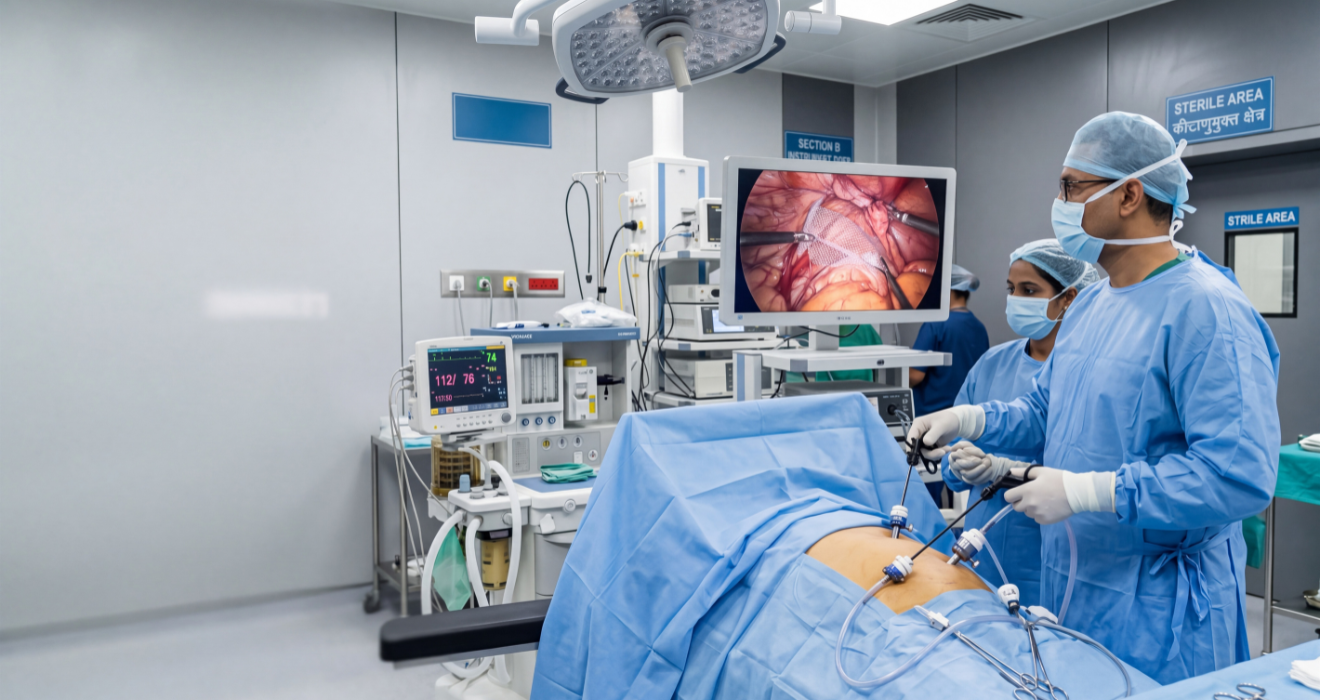
The term laparoscopic refers to a minimally invasive surgical technique that avoids the need for one large incision. Instead, the surgeon works through several small incisions, typically just large enough to accommodate a thin camera, called a laparoscope, and specialized narrow surgical instruments.
✅ The laparoscope transmits a magnified, high definition image of the internal surgical area to a monitor, which the surgical team views in real time throughout the procedure.
✅ Carbon dioxide gas is typically used to gently inflate the abdominal cavity, creating working space that allows the surgeon to see and maneuver instruments clearly.
✅ Because the incisions are small, there’s significantly less disruption to surrounding muscle and tissue compared to a single larger incision used in open surgery.
This approach applies to a wide range of abdominal procedures, but for hernia repair specifically, it offers particular advantages given how the abdominal wall itself needs to be accessed and reinforced.
The Purpose of the Procedure
At its core, hernia repair surgery exists to accomplish two related goals: returning the displaced tissue, whether that’s a portion of intestine or fatty tissue, back to its proper position within the abdominal cavity, and reinforcing the weakened section of the muscle wall so that the same tissue doesn’t push through again in the future.
✅ Simply pushing the displaced tissue back into place without reinforcing the muscle wall would leave the same weak point vulnerable to a repeat hernia.
✅ This is why the vast majority of modern hernia repairs, laparoscopic or open, involve placing a surgical mesh over or within the weakened area, rather than relying on stitching the natural tissue back together alone.
Step by Step: What Happens During the Procedure
Anesthesia. Laparoscopic hernia repair is performed under general anesthesia, meaning the patient is fully asleep and unaware throughout the procedure, with no memory of the surgery itself afterward.
Creating access points. The surgeon makes a small number of tiny incisions, usually around three, in the abdomen. These serve as entry points for the laparoscope and the surgical instruments.
Establishing visibility. The abdominal cavity is gently inflated with carbon dioxide gas to create enough working space for the surgeon to see clearly and move instruments without unnecessary contact with surrounding structures.
Locating and repositioning the hernia. Using the laparoscope for guidance, the surgeon identifies the hernia defect and carefully guides the displaced tissue back into its normal position within the abdominal cavity.
Placing the mesh. A surgical mesh, made of a biocompatible synthetic material, is positioned over or within the weakened area of the muscle wall. This mesh acts as a scaffold, providing immediate structural reinforcement while the body’s own tissue gradually grows into and around it over the following weeks, creating a strong, durable repair.
Securing the repair. The mesh is secured in place using small surgical tacks, sutures, or, in some techniques, simply held by the surrounding pressure of the abdominal wall itself, depending on the specific technique used and the hernia’s location.
Closing the incisions. Once the repair is complete, the gas is released from the abdominal cavity, the instruments are removed, and the small incisions are closed, typically with a few stitches or surgical adhesive, and covered with small dressings.
The entire procedure is efficient by surgical standards, generally completed in under an hour for a straightforward hernia repair, though the exact duration depends on the hernia’s size, location, and complexity.
Why Laparoscopic Repair Is Often Preferred Over Open Surgery
While open surgery remains appropriate and sometimes necessary for certain hernias, laparoscopic repair offers several meaningful advantages for suitable candidates:
✅ Smaller incisions result in noticeably smaller scars compared to the single larger incision used in open surgery.
✅ Post-operative pain tends to be less intense, since there’s less disruption to the surrounding muscle tissue.
✅ Recovery time is generally shorter, allowing a quicker return to normal daily activities and work.
✅ The risk of wound infection is often lower, given the smaller incision size.
✅ For hernias on both sides of the body, laparoscopic technique often allows both to be repaired during the same procedure through the same small incisions, without needing separate larger incisions.
What Happens Immediately After Surgery
✅ Most patients are moved to a recovery area where they’re monitored as the effects of general anesthesia wear off, typically over one to two hours.
✅ Mild discomfort at the incision sites is normal and is generally well managed with prescribed pain medication.
✅ Most patients are able to walk, with assistance, within a few hours of the procedure, and early gentle movement is actually encouraged rather than avoided.
✅ The majority of patients go home the same day, though some, particularly those with more complex repairs or other health considerations, may stay overnight for observation.
The Recovery Timeline
Recovery from laparoscopic hernia repair generally follows a fairly predictable path, though individual timelines can vary based on overall health, the hernia’s complexity, and how closely post-operative guidance is followed.
✅ The first few days typically involve mild to moderate discomfort at the incision sites, manageable with prescribed pain relief, along with some fatigue as the body begins healing.
✅ Light daily activities, including walking, gentle household tasks, and personal care, can usually resume within the first few days.
✅ Driving is generally avoided for the first week or so, or until the patient can comfortably and safely perform an emergency stop without pain interfering.
✅ Heavier lifting and strenuous exercise are typically restricted for a period of two to four weeks, depending on the surgeon’s specific guidance, since the mesh needs time to properly integrate with surrounding tissue.
✅ Full recovery, including return to more demanding physical activity or manual labor, generally falls within the two to four week range for most people, though this can extend further for larger or more complex repairs.
✅ Follow up appointments allow the surgical team to confirm that healing is progressing as expected and to clear the patient for a gradual return to more strenuous activity.
Managing Recovery Well
A few practical habits during the recovery period support better healing and reduce the risk of complications:
✅ Following prescribed pain management guidance rather than trying to push through discomfort unnecessarily, since well controlled pain actually supports better early mobility.
✅ Gradually increasing activity level based on how the body responds, rather than either remaining excessively inactive or pushing back into strenuous activity too soon.
✅ Keeping the incision sites clean and dry as instructed, and watching for any signs of infection such as increasing redness, warmth, swelling, or discharge.
✅ Avoiding heavy lifting or straining before the surgeon has specifically cleared it, since early strain on the repair site increases the risk of recurrence.
✅ Eating a fiber rich diet and staying well hydrated in the days after surgery, since straining during bowel movements should be avoided while the repair is still healing.
Potential Risks and Complications
As with any surgical procedure, laparoscopic hernia repair carries some risk, though serious complications are relatively uncommon:
✅ Infection at the incision sites, generally manageable with prompt treatment if it occurs.
✅ Bleeding or bruising around the surgical area, usually minor and self limiting.
✅ Recurrence of the hernia, which, while significantly reduced by mesh reinforcement, remains a small possibility over the longer term, particularly if activity restrictions aren’t followed during the healing period.
✅ Discomfort or a sensation of tightness around the mesh, which for most people resolves as the body adjusts, though a small proportion of patients experience longer term discomfort that may need further evaluation.
✅ General risks associated with anesthesia, which are discussed individually with each patient beforehand based on their specific health profile.
Who Is a Good Candidate for the Laparoscopic Approach
While laparoscopic repair suits the majority of hernia cases, certain factors can make open surgery a more appropriate choice for a particular individual:
✅ Very large hernias or those with complex anatomy may be better suited to open repair.
✅ A history of extensive previous abdominal surgery, which can create significant internal scarring, sometimes makes laparoscopic access more difficult.
✅ Certain underlying health conditions may affect a surgeon’s recommendation regarding anesthesia type or surgical approach.
This decision is always made individually, based on a thorough pre-operative evaluation and discussion between the surgeon and patient, rather than a one size fits all default.
Common Misunderstandings About the Procedure
Misunderstanding: Laparoscopic surgery means no recovery time at all. While recovery is generally faster than with open surgery, it’s still a surgical procedure requiring a genuine, structured recovery period, not an instant return to normal activity.
Misunderstanding: The mesh used in repair is uncomfortable or noticeable long term. For the vast majority of patients, the mesh becomes fully integrated with surrounding tissue over time and isn’t noticeable in daily life.
Misunderstanding: Once repaired, a hernia can never happen again in the same area. While mesh reinforcement significantly reduces recurrence risk, it doesn’t reduce it to zero, which is part of why following activity guidance during recovery matters.
Laparoscopic hernia repair is a well established, minimally invasive procedure that combines repositioning displaced tissue with a reinforcing mesh to provide a durable, long term repair, generally with a faster recovery and less discomfort than traditional open surgery. Understanding each step of the process ahead of time, from anesthesia through to the recovery timeline, often removes a significant amount of the uncertainty patients bring into the experience. If a hernia has been diagnosed, understanding the procedure ahead of time makes the whole process feel far less uncertain. Kamla Hospital’s modular operation theatre supports laparoscopic hernia repair on Main Pataudi Road, Sector 37D, Gurugram.