
What your body is made of, not just what it weighs
Body fat percentage estimates how much of your total weight comes from fat, compared to muscle, bone, and other tissue, which gives a more detailed picture than weight or BMI alone. Two people can weigh the same and have very different body compositions, one with more muscle, another with more fat, and body fat percentage is one way to capture that difference. That said, calculators like this one rely on estimation formulas based on measurements, not direct testing, so the result is a useful approximation rather than a precise clinical figure
Composition Matters
Body fat percentage looks at what weight is made of, not just the number.
Estimate, Not Exact
Measurement based formulas approximate body fat; they don't measure it directly.
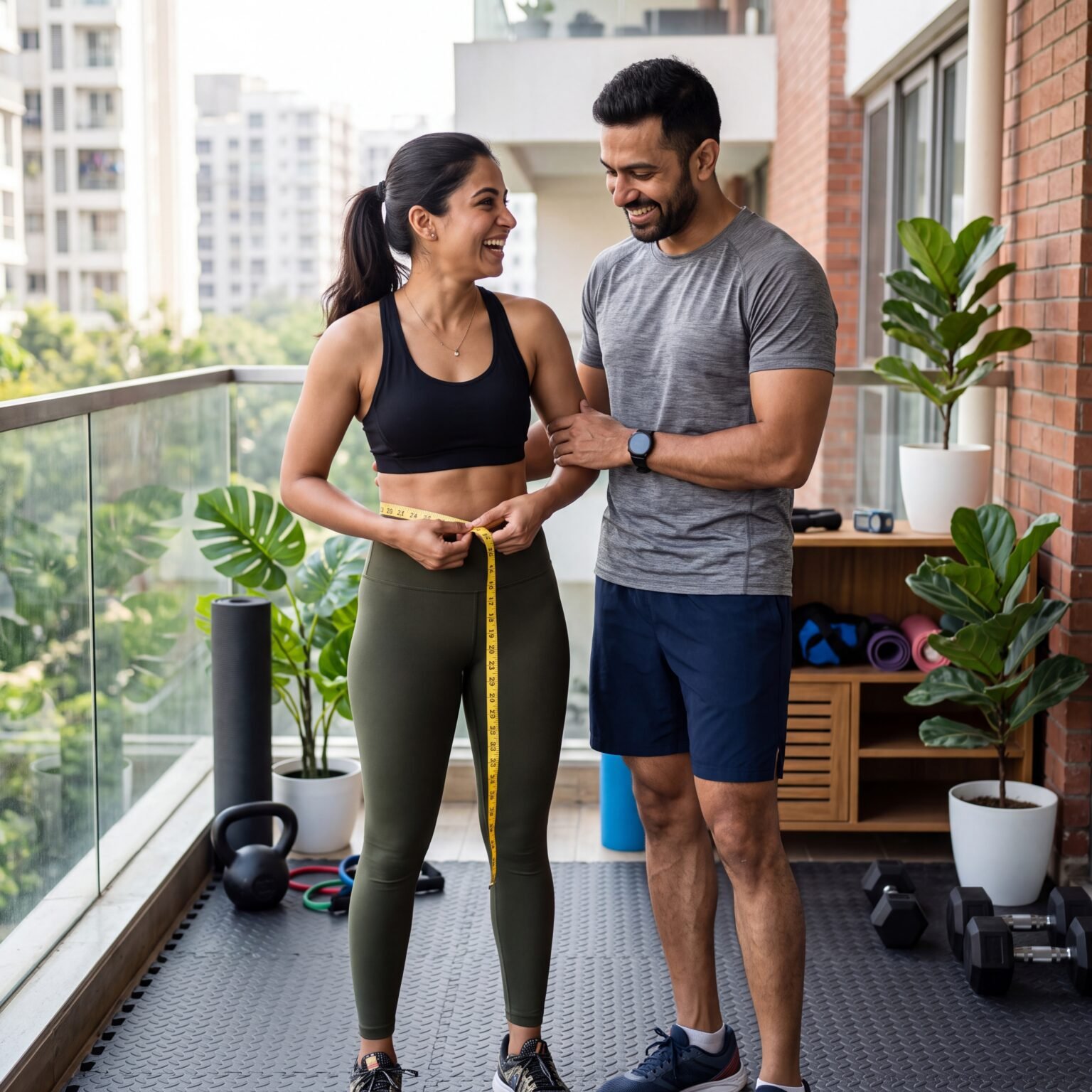
Body Fat Calculator
Estimate your body fat percentage using your age, gender, height and body measurements.
Estimated Body Fat Percentage
Based on the measurements provided
Body Fat Range
What is Body Fat Percentage?
Body fat percentage represents the proportion of your total body weight that consists of fat. Unlike BMI, body fat percentage attempts to distinguish between fat mass and lean body mass.
This calculator uses the U.S. Navy circumference method, which estimates body fat from measurements such as waist, neck, height and, for women, hip circumference.
General Body Fat Categories
| Category | Men | Women |
|---|---|---|
| Essential Fat | 2–5% | 10–13% |
| Athletes | 6–13% | 14–20% |
| Fitness | 14–17% | 21–24% |
| Average | 18–24% | 25–31% |
| Higher | 25%+ | 32%+ |
How to Take Your Measurements
- Use a flexible measuring tape.
- Keep the tape level and snug without compressing the skin.
- Measure consistently at the same location each time.
- Avoid pulling the tape excessively tight.
- For the most consistent results, take measurements under similar conditions each time.
This calculator provides an estimate and is intended for informational purposes only. Circumference-based body fat estimates may differ from measurements obtained using DEXA, bioelectrical impedance, skinfold testing or other clinical methods. Results should not be considered a diagnosis or a substitute for professional medical advice.
What people usually ask about their body fat result
A body fat percentage can be one of the more confusing numbers to interpret, partly because it's calculated differently depending on the method used, and partly because healthy ranges vary meaningfully by age, gender, and even fitness background. Some people are surprised their result doesn't match how they feel about their own body, while others aren't sure whether their number falls into a normal range at all or what to actually do if it doesn't. Below are straightforward answers to the questions we hear most often, covering how the calculation works, why it's an estimate rather than an exact figure, what typical healthy ranges look like, and when it's worth bringing your result to a doctor rather than trying to interpret it on your own.
This calculator uses body measurements, including neck, waist, and hip circumference alongside height, to estimate body fat percentage using a standard formula. It's a widely used method, though it remains an estimate rather than a direct measurement.
Measurement based calculators are reasonably useful for tracking general trends over time, but they're less precise than clinical methods like DEXA scans or skinfold calipers performed by a trained professional. Treat the result as a helpful estimate, not an exact figure.
Healthy ranges differ by gender and age, and there's no single number that applies to everyone. Athletic individuals often fall on the lower end of typical ranges, while healthy ranges are generally somewhat higher for women than men due to natural physiological differences.
Measurement technique matters significantly. Taking waist or neck measurements incorrectly, or measuring at different times of day, can shift the result. It's worth remeasuring carefully before drawing conclusions from a single reading.
They measure different things and are most useful together rather than one replacing the other. BMI is a quick screening tool based on height and weight, while body fat percentage gives more insight into body composition specifically.
It's best not to. A single body fat percentage reading is one data point, and decisions about diet, exercise, or health goals are far better made in conversation with a doctor who can consider your full health picture rather than one number in isolation.