
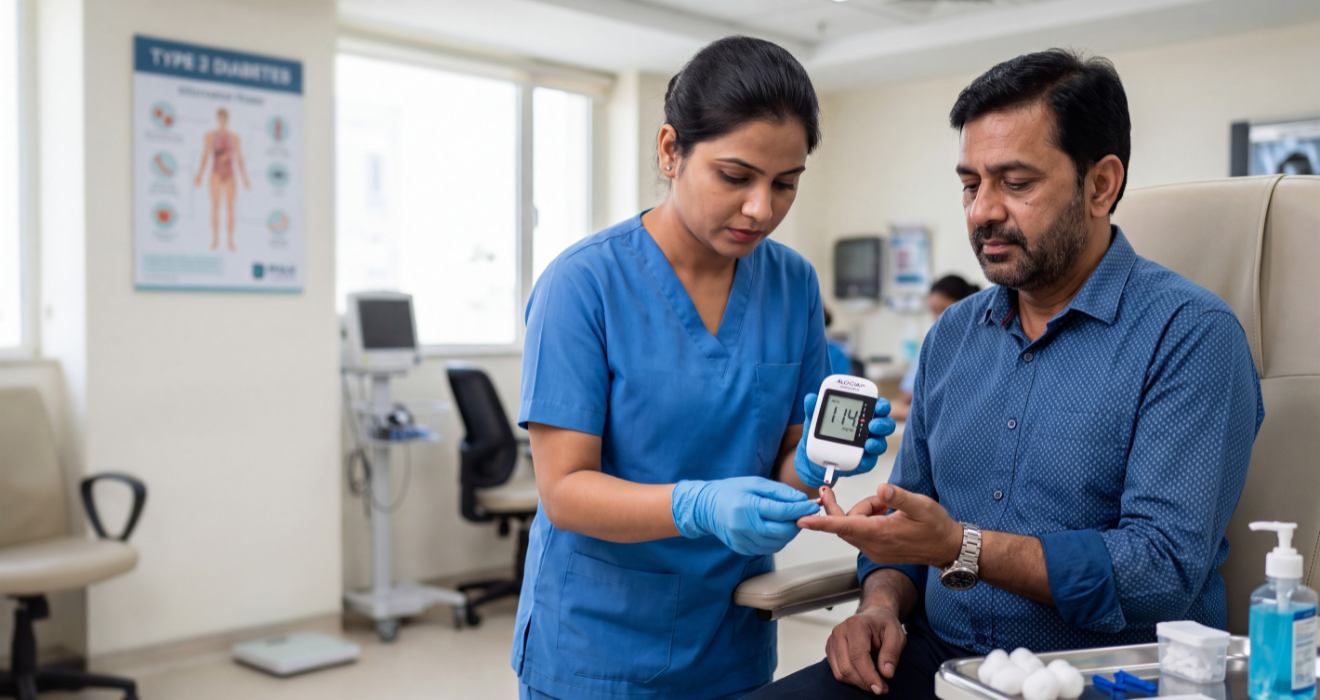
Type 2 Diabetes: Early Signs Most People Miss
Type 2 diabetes is often described as a silent, slow developing condition, and that description is accurate in a way that has real consequences. Unlike an acute illness that announces itself clearly, type 2 diabetes tends to creep in gradually, producing symptoms mild and vague enough that most people attribute them to something else entirely, like getting older, working too hard, or simply not sleeping well. By the time many people are actually diagnosed, they’ve often been living with elevated blood sugar for months or even years.
Why the Early Signs Are So Easy to Miss
The body is remarkably good at compensating for gradual changes, which works against early detection in the case of diabetes. Blood sugar levels don’t spike suddenly in most cases of type 2 diabetes, they drift upward slowly as the body’s ability to regulate glucose deteriorates over time. This slow drift means symptoms build incrementally rather than appearing suddenly and dramatically, allowing them to blend into everyday life almost unnoticed.
Add to this the fact that many early symptoms overlap heavily with completely ordinary, non concerning experiences, being a little more tired than usual, feeling thirstier on a hot day, needing to use the bathroom slightly more often, and it becomes clear why so many people don’t connect these dots until a routine blood test reveals the underlying issue.
The Early Signs Worth Paying Attention To
While no single symptom on this list definitively confirms diabetes on its own, a pattern involving several of these together, especially if it persists over weeks, is worth taking seriously.
✅ Increased thirst that feels different from normal, often described as a thirst that doesn’t fully go away even after drinking water.
✅ Frequent urination, particularly needing to get up multiple times during the night, which happens as the kidneys work to filter out excess sugar from the blood.
✅ Persistent fatigue that doesn’t improve with adequate rest or sleep, since cells aren’t able to use glucose efficiently for energy even though sugar levels in the blood are elevated.
✅ Unexplained weight loss, which can occur even without any change in diet or activity, as the body begins breaking down fat and muscle for energy when it can’t properly use glucose.
✅ Slow healing cuts, bruises, or wounds, since elevated blood sugar can impair circulation and the body’s natural healing processes.
✅ Frequent infections, particularly skin infections, urinary tract infections, or gum infections, since elevated blood sugar creates a more favorable environment for bacterial and fungal growth.
✅ Blurred vision that comes and goes, caused by fluctuating fluid levels in the lenses of the eyes as blood sugar rises and falls.
✅ Tingling or numbness in the hands or feet, an early sign of nerve involvement that can develop even before a formal diagnosis is made.
✅ Increased hunger, particularly a hunger that doesn’t feel satisfied even after eating, since cells aren’t receiving the glucose they need despite plenty being present in the bloodstream.
✅ Patches of darkened skin, particularly around the neck or armpits, a condition called acanthosis nigricans that’s associated with insulin resistance.
Who Is Most Likely to Develop Type 2 Diabetes
Certain factors significantly increase the likelihood of developing type 2 diabetes, and recognizing these risk factors is just as important as recognizing symptoms, since many people at high risk have no symptoms at all in the early stages.
✅ A family history of diabetes substantially increases personal risk, suggesting a genetic component to how the body regulates blood sugar.
✅ Excess body weight, particularly weight concentrated around the abdomen, is strongly linked to insulin resistance, a key driver of type 2 diabetes.
✅ A sedentary lifestyle reduces the body’s efficiency at using glucose, since physical activity plays a direct role in how effectively cells respond to insulin.
✅ Age increases risk, with type 2 diabetes becoming more common after the age of forty five, though it’s increasingly being diagnosed in younger adults as well.
✅ A history of gestational diabetes during pregnancy increases the likelihood of developing type 2 diabetes later in life.
✅ High blood pressure and abnormal cholesterol levels often occur alongside insulin resistance, and having one of these conditions increases the likelihood of the others being present as well.
✅ Polycystic ovary syndrome is associated with insulin resistance and raises long term diabetes risk in women who have it.
✅ Certain ethnic backgrounds carry a higher genetic predisposition toward developing type 2 diabetes at a given body weight compared to others.
Why Catching It Early Actually Matters
Type 2 diabetes doesn’t become dangerous the moment it’s diagnosed, it becomes dangerous through years of elevated blood sugar quietly damaging blood vessels, nerves, and organs. This is exactly why early detection changes the entire trajectory of the condition.
✅ Early stage elevated blood sugar, sometimes called prediabetes, can often be reversed entirely through lifestyle changes before it progresses to full diabetes.
✅ Even after a formal diabetes diagnosis, catching it early allows blood sugar to be brought under control before complications like nerve damage, kidney damage, or vision problems have a chance to develop.
✅ Early management typically requires less intensive medication, and in some cases none at all, if lifestyle changes are implemented promptly and consistently.
✅ Cardiovascular risk, which rises significantly with poorly controlled diabetes, can be minimized substantially when blood sugar is brought under control soon after diagnosis rather than after years of elevation.
How Type 2 Diabetes Is Diagnosed
Diagnosis is refreshingly straightforward compared to some conditions, relying on a small number of well established blood tests rather than extensive investigation.
Fasting blood sugar test. This measures glucose levels after at least eight hours without food, providing a baseline reading of how the body manages sugar at rest.
HbA1c test. This measures average blood sugar levels over the preceding two to three months by assessing how much sugar has attached to red blood cells, offering a broader picture than a single fasting reading alone.
Oral glucose tolerance test. This involves drinking a sugary solution and having blood sugar measured at intervals afterward, showing how effectively the body processes and clears glucose from a meal.
Random blood sugar test. In some cases, particularly when symptoms are already present, a random blood sugar reading taken at any time of day, without fasting, can support a diagnosis if levels are significantly elevated.
A single test result usually isn’t used in isolation to confirm a diagnosis. Doctors typically look at the overall pattern, sometimes repeating a test on a separate day, to confirm findings before starting treatment.
What Happens After Diagnosis
Being diagnosed with type 2 diabetes doesn’t mean life changes overnight in a dramatic, restrictive way. For most people, management centers on a combination of approaches tailored to their specific situation.
✅ Dietary adjustment, focusing on consistent meal timing, portion awareness, and reducing foods that cause sharp blood sugar spikes, rather than eliminating entire food groups outright.
✅ Regular physical activity, since exercise directly improves the body’s sensitivity to insulin, helping cells use glucose more effectively.
✅ Weight management, particularly for those carrying excess weight, since even modest weight loss can meaningfully improve blood sugar control.
✅ Medication, when lifestyle changes alone aren’t sufficient to bring blood sugar into a healthy range, ranging from oral medications to injectable options depending on individual needs.
✅ Regular monitoring, both through home blood sugar checks and periodic HbA1c testing, to track how well the current management plan is working over time.
✅ Routine screening for complications, including eye examinations, kidney function tests, and foot examinations, since these are the areas most commonly affected by long term elevated blood sugar.
Common Misunderstandings About Type 2 Diabetes
Misunderstanding: Only overweight people get type 2 diabetes. While excess weight is a significant risk factor, people at a normal body weight can and do develop type 2 diabetes, particularly if they have a strong family history or other risk factors present.
Misunderstanding: Eating sugar directly causes diabetes. The relationship is more nuanced. Diet plays a role, particularly in contributing to excess weight and insulin resistance over time, but diabetes develops from a broader combination of genetic and lifestyle factors, not simply from sugar consumption in isolation.
Misunderstanding: If you feel fine, you don’t need to get tested. As outlined throughout this article, feeling fine is entirely consistent with having elevated blood sugar, particularly in the earlier stages, which is exactly why screening matters even in the absence of symptoms.
Misunderstanding: Once diagnosed, insulin injections are inevitable. Many people with type 2 diabetes manage their condition successfully for years, sometimes indefinitely, through lifestyle changes and oral medication alone, without ever requiring insulin.
Practical Steps If You Recognize These Signs
If several of the early symptoms described above sound familiar, or if you have significant risk factors even without clear symptoms, a few practical steps can help clarify the situation quickly:
✅ Schedule a fasting blood sugar test or HbA1c test rather than waiting to see if symptoms resolve on their own.
✅ Keep a simple note of when symptoms occur and how often, which can help a doctor assess the pattern more accurately.
✅ Mention any family history of diabetes clearly during the consultation, since this significantly informs how a doctor interprets borderline results.
✅ Avoid trying to self diagnose or self treat based on internet research alone, since blood sugar regulation issues can stem from several different underlying causes that require proper testing to distinguish.
Type 2 diabetes rarely announces itself with a single obvious symptom. It tends to arrive gradually, through a collection of mild, easily dismissed signs that build over months. Recognizing this pattern, and taking it seriously enough to get a simple blood test rather than assuming it’s just tiredness or aging, is often the difference between catching the condition early, when it’s highly manageable, and discovering it only after complications have already begun to develop. If any of these symptoms sound familiar, a straightforward blood test can settle the question quickly rather than leaving it to guesswork. Kamla Hospital’s in-house lab and General Medicine department are on Main Pataudi Road, Sector 37D, Gurugram.