
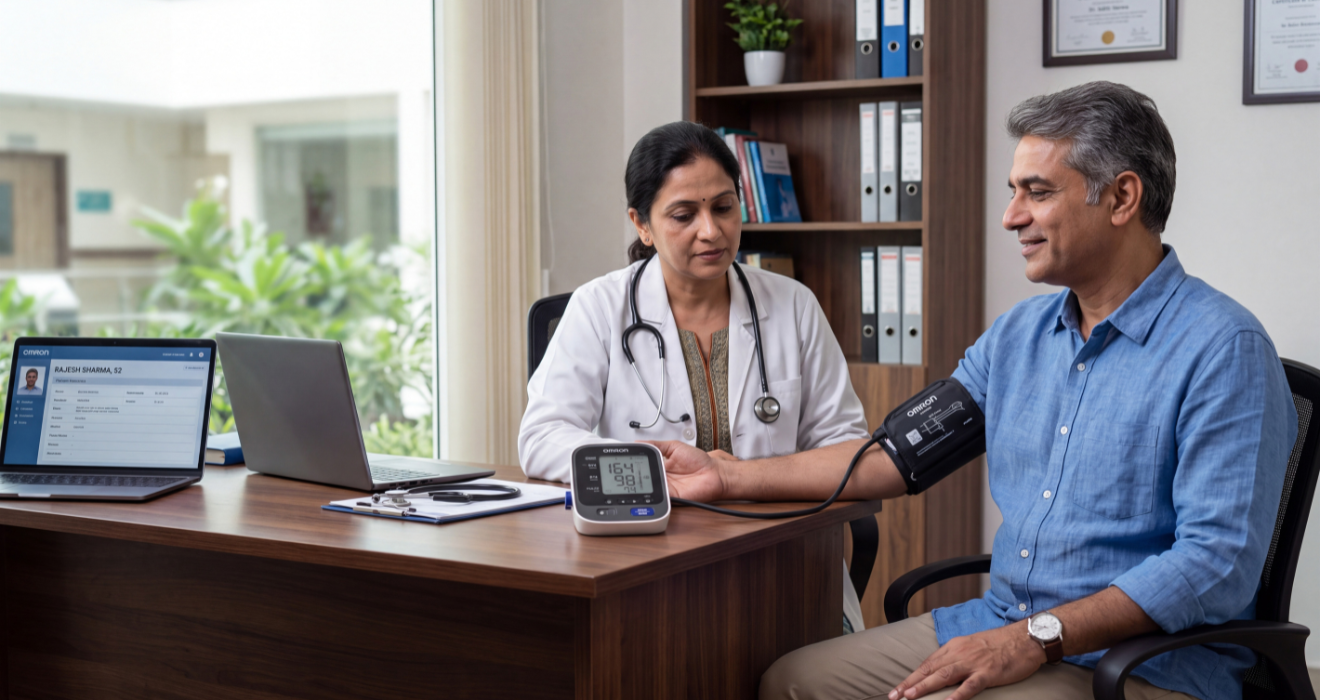
Understanding Hypertension: The Condition With No Warning Signs
Hypertension has earned the nickname the silent condition for good reason. Unlike an infection that causes fever, or an injury that causes obvious pain, high blood pressure can build quietly for years without producing any symptoms a person would notice on their own. That silence is precisely what makes it dangerous, because the damage it causes to blood vessels, the heart, and the kidneys doesn’t wait for symptoms to appear before it begins.
What Blood Pressure Actually Measures
Blood pressure is a measurement of the force exerted by circulating blood against the walls of the arteries. It’s expressed as two numbers, systolic pressure over diastolic pressure. Systolic pressure reflects the force when the heart contracts and pumps blood out, while diastolic pressure reflects the force when the heart rests between beats. When these numbers remain consistently elevated over time, the diagnosis is hypertension.
The reason this matters isn’t the number itself, but what sustained elevated pressure does to the body over months and years. Arteries aren’t designed to withstand constant excess force. Over time, that pressure damages the delicate inner lining of blood vessels, encourages the buildup of fatty deposits, and forces the heart to work harder than it should to circulate blood effectively.
Why It So Rarely Causes Symptoms
Most people assume that a serious medical condition should come with warning signs, some kind of discomfort or noticeable change that would prompt a visit to the doctor. Hypertension breaks that assumption almost entirely.
✅ Blood vessels and the heart can tolerate elevated pressure for extended periods without triggering pain receptors or obvious dysfunction.
✅ The gradual nature of the damage means the body adjusts incrementally, without a single dramatic moment that would alert someone that something is wrong.
✅ Occasional symptoms sometimes attributed to high blood pressure, such as headaches or dizziness, are actually uncommon unless blood pressure reaches dangerously high levels, meaning most people with moderately elevated readings feel completely normal.
✅ Because there’s no discomfort driving people to seek care, hypertension is frequently discovered incidentally, during a routine checkup, a pre operative assessment, or a visit for an entirely unrelated concern.
This combination of factors means that a person can have significantly elevated blood pressure for years, feeling entirely well, while the underlying damage to their cardiovascular system continues to accumulate in the background.
Who Is Most at Risk
Several factors increase the likelihood of developing hypertension, some of which can be modified and some of which cannot:
✅ Age is a significant factor, since blood vessels naturally lose some of their elasticity over time, making sustained elevated pressure more likely.
✅ A family history of hypertension suggests a genetic predisposition that increases personal risk regardless of lifestyle.
✅ Excess body weight increases the volume of blood the heart needs to circulate and adds strain to the cardiovascular system overall.
✅ High salt intake causes the body to retain more fluid, which increases blood volume and, in turn, blood pressure.
✅ Chronic stress can contribute to sustained elevations in blood pressure over time, particularly when combined with poor coping habits like overeating or reduced physical activity.
✅ Sedentary lifestyle patterns reduce cardiovascular fitness and make it harder for the body to regulate blood pressure efficiently.
✅ Excess alcohol consumption and smoking both contribute directly to elevated blood pressure and accelerate vascular damage.
✅ Certain underlying conditions, including kidney disease, thyroid disorders, and sleep apnea, can cause or worsen hypertension.
How Hypertension Is Actually Diagnosed
Because a single elevated reading doesn’t necessarily mean a person has hypertension, diagnosis relies on a pattern of consistent measurement rather than a one time result.
Repeated readings over time. Blood pressure naturally fluctuates throughout the day based on activity, stress, caffeine intake, and even the time of day itself. A diagnosis of hypertension typically requires multiple elevated readings taken on separate occasions, rather than a single high number recorded during one visit.
Home monitoring. Doctors often recommend tracking blood pressure at home over a period of days or weeks, since readings taken in a clinical setting can sometimes be elevated simply due to the anxiety of being examined, a phenomenon often referred to as white coat hypertension.
Ambulatory monitoring, when needed. In some cases, a wearable monitor that records blood pressure at intervals throughout a full day and night provides the clearest picture of a person’s true blood pressure pattern, including how it behaves during sleep.
Additional testing to assess impact. Once hypertension is confirmed, doctors often order further tests to check whether it has already begun affecting other organs, including kidney function tests, an ECG to assess heart electrical activity, and sometimes an echocardiogram to evaluate the heart’s structure and pumping function.
What Untreated Hypertension Does Over Time
The consequences of sustained high blood pressure develop gradually but can eventually become severe and, in some cases, life threatening:
✅ Increased risk of heart attack, since the heart is forced to work harder against elevated resistance in the arteries, which over time can weaken the heart muscle and damage coronary vessels.
✅ Increased risk of stroke, since elevated pressure can damage or rupture blood vessels supplying the brain.
✅ Kidney damage, since the kidneys rely on a delicate network of small blood vessels that are particularly vulnerable to sustained high pressure, potentially leading to chronic kidney disease over time.
✅ Vision problems, since elevated pressure can damage the small blood vessels in the eyes, potentially affecting eyesight if left unmanaged.
✅ Heart failure, where the heart muscle, having worked against excess resistance for years, gradually weakens and becomes less effective at pumping blood.
✅ Peripheral artery disease, involving reduced blood flow to the limbs due to narrowed or damaged arteries.
None of these outcomes happen overnight. They represent the cumulative effect of pressure that was allowed to remain elevated, often for years, without being identified or addressed.
How Hypertension Is Managed
The encouraging part of this picture is that hypertension, once identified, is genuinely manageable for the vast majority of people, particularly when addressed through a combination of lifestyle change and, where necessary, medication.
Lifestyle measures that make a meaningful difference:
✅ Reducing salt intake, since sodium directly influences fluid retention and blood volume
✅ Maintaining a healthy body weight, since even modest weight loss can produce a measurable reduction in blood pressure
✅ Engaging in regular physical activity, which strengthens the heart and improves the efficiency of the circulatory system overall
✅ Limiting alcohol consumption and avoiding tobacco use entirely
✅ Managing stress through consistent sleep, relaxation practices, and reducing unnecessary sources of chronic tension
✅ Following a diet rich in fruits, vegetables, whole grains, and lean protein, while minimizing processed and high sodium foods
Medication, when lifestyle changes aren’t enough on their own:
✅ Several categories of blood pressure medication exist, working through different mechanisms, including reducing fluid volume, relaxing blood vessels, or reducing the heart’s workload directly
✅ The right medication, or combination of medications, is chosen based on an individual’s specific health profile, including any other existing conditions like diabetes or kidney disease
✅ Medication for hypertension is generally intended for long term, consistent use rather than something taken only when symptoms appear, since there typically aren’t symptoms to guide dosing in the first place
✅ Regular follow up allows adjustment of medication over time as needed, based on ongoing blood pressure readings and overall health status
Why Consistency Matters More Than Occasional Effort
One of the more common mistakes people make once diagnosed is treating hypertension management as something to focus on intensely for a while and then relax once numbers improve. This approach tends to backfire, since blood pressure typically rises again once the lifestyle changes or medication that controlled it are discontinued.
✅ Stopping medication once blood pressure normalizes often causes it to rise again, since the underlying tendency toward hypertension hasn’t disappeared, it’s simply being controlled.
✅ Lifestyle changes need to be sustained over the long term to maintain their benefit, rather than functioning as a short term fix.
✅ Regular monitoring, even once blood pressure is well controlled, helps catch any drift back toward elevated levels before it becomes significant again.
Common Misunderstandings About Hypertension
Misunderstanding: You’ll know if your blood pressure is high because you’ll feel it. As covered earlier, this is rarely true. Most people with hypertension feel entirely normal.
Misunderstanding: Hypertension only affects older adults. While risk increases with age, younger adults, particularly those with obesity, high stress lifestyles, or a strong family history, can also develop hypertension.
Misunderstanding: Once you start medication, you’re on it forever with no flexibility. While many people do require long term medication, some individuals, particularly those who make substantial lifestyle changes early on, are able to reduce or, in some cases, eventually discontinue medication under a doctor’s supervision. This decision should never be made independently, but it’s not always a permanent, unchangeable commitment.
Misunderstanding: A single high reading at a pharmacy or health camp means you definitely have hypertension. A single reading, particularly one taken outside a controlled clinical setting, isn’t sufficient for diagnosis. It’s a signal to get properly checked, not a confirmed diagnosis on its own.
The Value of Routine Screening
Given how silently hypertension develops, routine screening becomes one of the most valuable and low effort tools available for protecting long term cardiovascular health.
✅ Blood pressure checks are quick, painless, and can be done as part of any routine medical visit.
✅ Regular screening allows early detection, often years before any complications would otherwise bring the condition to light.
✅ Early detection dramatically expands the range of manageable, lifestyle based interventions available before medication becomes necessary.
✅ For people with risk factors like family history, obesity, or a sedentary lifestyle, more frequent monitoring is particularly worthwhile, even in the absence of any symptoms.
When to Seek Medical Attention
While hypertension itself rarely causes symptoms, certain signs do warrant prompt medical attention, particularly if blood pressure has reached a significantly elevated level:
✅ Severe headache accompanied by visual disturbances
✅ Chest pain or difficulty breathing
✅ Sudden confusion, difficulty speaking, or weakness on one side of the body, which could indicate a stroke
✅ Nosebleeds that are severe or don’t stop with typical measures, particularly alongside other symptoms
These situations represent a hypertensive emergency and require immediate medical care, rather than being managed through routine follow up.
Hypertension’s greatest danger lies in its silence. It rarely announces itself through symptoms, which means the only reliable way to catch it is through regular blood pressure monitoring, regardless of how well a person feels. Once identified, it’s a highly manageable condition through a combination of lifestyle change and, when needed, medication, but that management needs to be consistent and long term rather than occasional. A routine blood pressure check is one of the simplest, most valuable things a person can do for their long term health. Kamla Hospital’s General Medicine department offers this on Main Pataudi Road, Sector 37D, Gurugram.